How to Use an Ovulation Test: Best Time, Tips & Accuracy
Getting pregnant is a natural process where timing plays an important role. Ovulation is the key moment each month when the body releases an egg, giving the best chance to conceive. However, it can sometimes be difficult to know exactly when this happens, which creates uncertainty for many couples. Ovulation tests, also called ovulation predictor kits (OPKs), help solve this problem. They work like a guide, showing when ovulation is likely to occur by detecting hormonal changes in the body. At Hardik IVF and Fertility Centre, these tests are often used as part of personalized fertility care in Kathmandu to help patients better understand their cycle and improve their chances of conception. In the following sections, we will explain how ovulation tests work and how to use them effectively.
Why Is Ovulation Tracking Important for Pregnancy?
Conception depends heavily on timing. After ovulation, an egg survives for only about 12 to 24 hours. Sperm are more long-lived and can survive in the female reproductive tract for up to 5 days. Because of this, the goal is to have healthy sperm present in the fallopian tubes when the egg is released. This period is called the fertile window. It includes the 5 days leading up to ovulation and the day of ovulation itself. Identifying this window removes uncertainty and helps plan intercourse at the right time, improving the chances of pregnancy. This is especially useful for women with irregular cycles, where predicting ovulation can be more difficult.
What Is an Ovulation Test and How Does It Work? Decoding the LH Surge
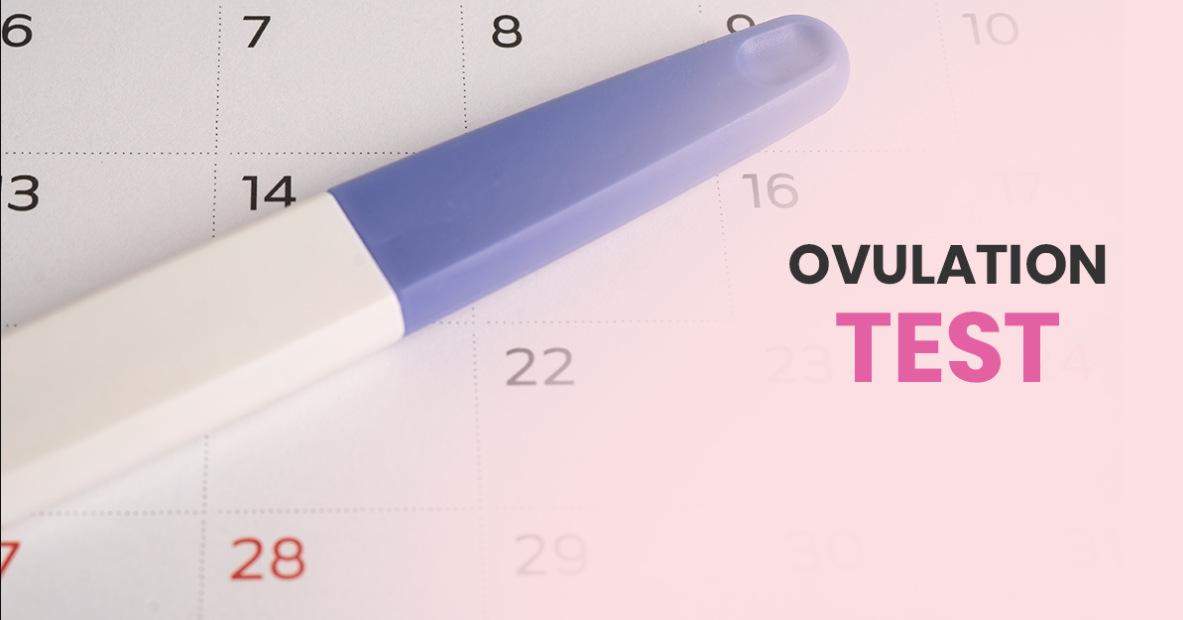
An ovulation test is a simple, painless urine test you can do at home. It works by detecting a hormone called luteinizing hormone (LH). LH is always present in small amounts throughout the cycle, but about 24 to 36 hours before ovulation, it rises sharply in what is known as the LH surge. This surge is the final signal that triggers the release of a mature egg from the ovary. A positive ovulation test indicates that this surge is happening, meaning ovulation is likely to occur soon. It is essentially a sign that your body is entering its most fertile phase. Some advanced digital ovulation tests can also detect rising estrogen levels, which increase a few days before the LH surge. This provides an earlier indication that ovulation is approaching.
When Should You Start Using an Ovulation Test?
Timing ovulation tests correctly is very important. If you start testing too early, it can feel repetitive and frustrating. If you start too late, you may miss the LH surge completely. The key is to base your starting day on your cycle length. If you have regular cycles, first calculate your average cycle length (from the first day of your period to the day before your next period). Then subtract about 17 days to estimate when to begin testing. For example: 26-day cycle: start testing around Day 9 28-day cycle: start around Day 11 30-day cycle: start around Day 13 If your cycles are irregular, it becomes a bit more challenging, but still manageable. In that case, it is best to use your shortest recent cycle as a guide. For example, if your cycles vary between 28 and 35 days, use 28 days as the reference and start testing around Day 11.
You may need to test for more days, but this helps ensure you don’t miss the LH surge. To guide you about irregular cycles on a case-by-case basis, our family at Hardik IVF and Fertility Centre extends professional advice in the process of the overall infertility treatment in Kathmandu.

How to Use an Ovulation Test Correctly? A Step-by-Step Guide to Flawless Testing.
These are the best practices that should be observed to obtain the most accurate results:
Read the Manual: Although the concept is the same, every brand contains unique instructions. The leaflet can help save a lot of money in a matter of minutes.
Test Your Sweet Spot: You should test at some time of the day when it is late in the morning and early in the afternoon (e.g., 10 AM to 2 PM). Unlike the pregnancy tests, first morning urine is not the best choice for ovulation predictor kits (OPKs) since the marginal LH surge might not have concentrated sufficiently throughout the night.
Remain Hydrated: Stay hydrated, but avoid drinking too much fluid in the 2–4 hours before taking the test. If you are overhydrated, your urine can become diluted, which may lower the concentration of LH and lead to a false negative result.
Read the results: The majority of tests have a control line and a test line. When a test line is as dark or even darker than the control line, a positive result is indicated. A weak test line indicates that the surge has not occurred yet—continue to test!
Take an Action: Your green light is a positive test! Within the next 24-36 hours, ovulation is likely to take place. It is the right time to have intercourse or planned fertility processes such as Intrauterine Insemination (IUI).

When Should You See a Fertility Specialist?
Ovulation tests are powerful, but they are not infallible. You need to see a fertility specialist when: You are diagnosed with PCOS because false positives may be encountered due to the high levels of LH at the baseline level. You experience abnormal cycles and fail to identify a definite surge even after several months of testing. You are less than 35 years old and have not achieved success in 12 months (or it should be 6 months in case you are aged above 35 years) of trying. You think you are not even ovulating. You have fertility treatments and must have specific timing of procedures, such as IUI or IVF.
At our facility, ovulation testing is often done at home for convenience. Along with this, we use follicular tracking ultrasound scans, blood hormone tests, and close cycle monitoring to identify your fertile window more accurately. This combined approach helps us time ovulation with greater precision and supports effective infertility treatment in Kathmandu.
Final Thoughts: Using Ovulation Tests to Improve Your Chances of Pregnancy
The first point that you should know before trying to conceive is to understand your cycle so that you are as empowered as possible on your journey to becoming a parent. Ovulation tests give you a transparent and accessible ovulation picture.They are a helpful starting point, but it is important to remember that fertility depends on several factors, including egg and sperm health, uterine health, and overall well-being. If you feel you are not making progress or simply need reassurance that you are on the right track, it is important to know that you are not alone. Many couples experience similar concerns during their fertility journey. At Hardik IVF and Fertility Centre, we provide appropriate diagnostic evaluation and individualized fertility care in Kathmandu. Our aim is to support you with clear guidance and evidence-based treatment options. If needed, you can follow up with a fertility specialist for personalized advice and further evaluation to help you move forward with your family planning journey.